Description of the course: The course serves as an introduction to programming tailored for students without prior experience. It is divided into two parts: the first part focuses on basic programming concepts, principles, and problem-solving techniques, emphasising language-agnostic approaches. The second part presents the basics of C++, and introduces elements of Python and R programming. The course concludes with an exploration of Language Model Generation (LMG) using examples from ChatGPT.
Literature
“Programming Logic and Design” by Joyce Farrell
“C++ Programming Language” by Bjarne Stroustrups
“An Introduction to Python Programming for Scientists and Engineers” by Johnny Wei-Bing Lin et al.
“Deep Learning” by Ian Goodfellow, Yoshua Bengio, and Aaron Courville
Introduction to elementary particle physics (BSc course @ TU Delft)
Contents
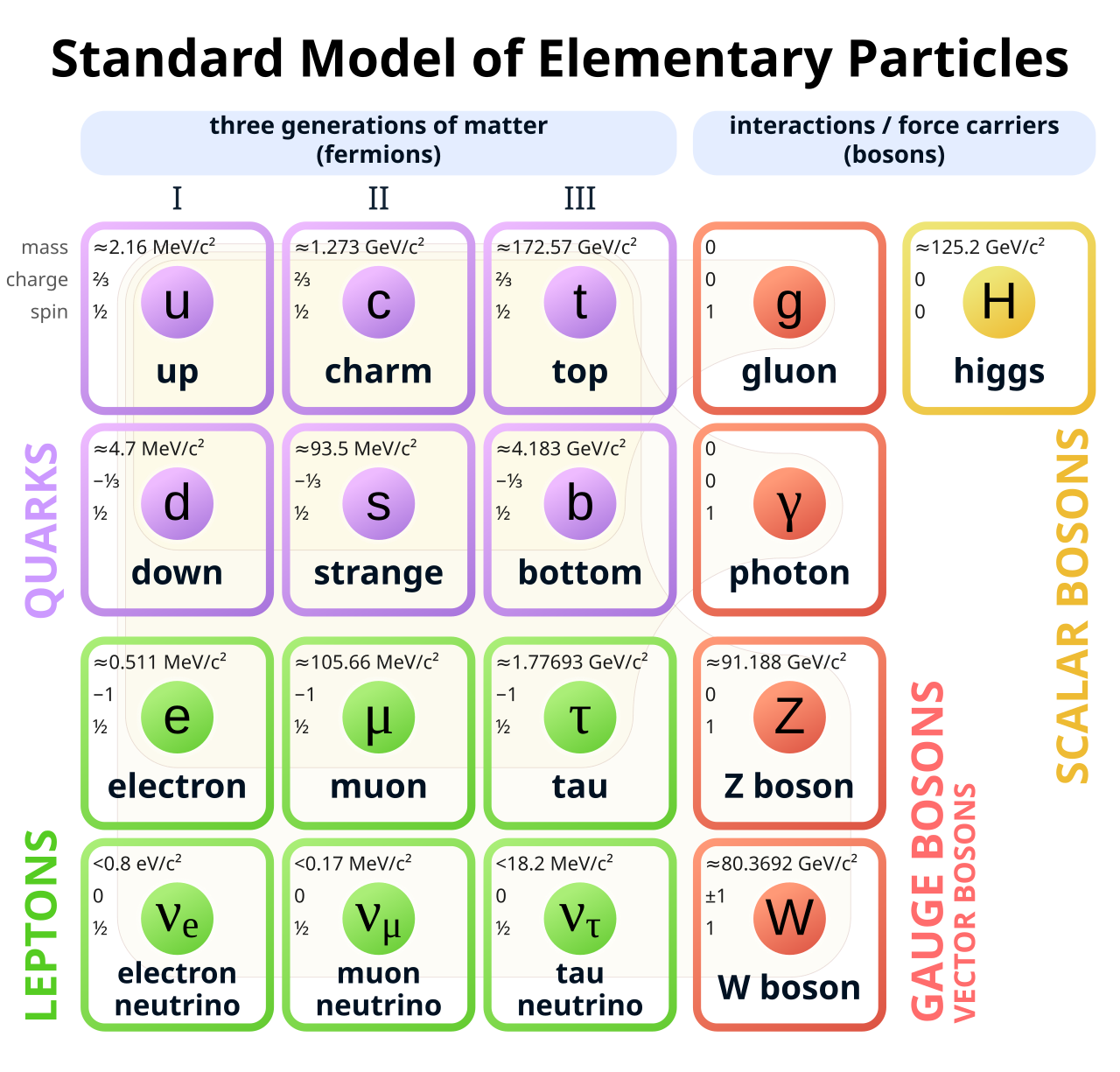
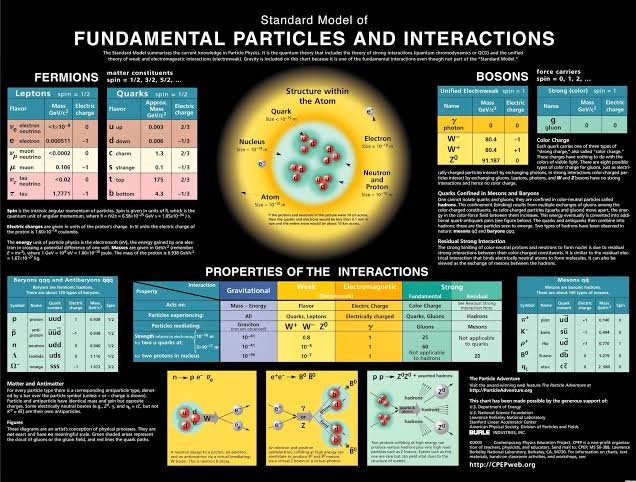
The course gives a first flavour to the student about the basic concepts of the Standard Model of particle physics.
The students will be introduced to:
Special relativity
Elements of quantum mechanics
The interactions of the Standard model
The particle zoo
The need for physics beyond the Standard Model
Interaction of particles with matter, particle detectors and instrumentation
The course builds up gradually and attempts to introduce the subatomic world as described by the Standard Model, its fundamental particles and their interactions.
In the course of the semester the students will be introduced to:
Symmetries, invariances and conservation laws
Particles (e.g. gauge bosons, leptons, quarks, hadrons) and their properties (e.g. charge, spin magnetic moment)
Interaction of particles with matter and particle detectors
Gauge theories
Quantum Electrodynamics (QED)
Quantum Chromodynamics (QCD)
Glashow-Weinberg-Salam theory (weak interactions)
Spontaneous symmetry breaking and the Higgs mechanism
Connection between astroparticle and particle physics
Textbook: “Introduction to Elementary Particles”, D. Griffiths