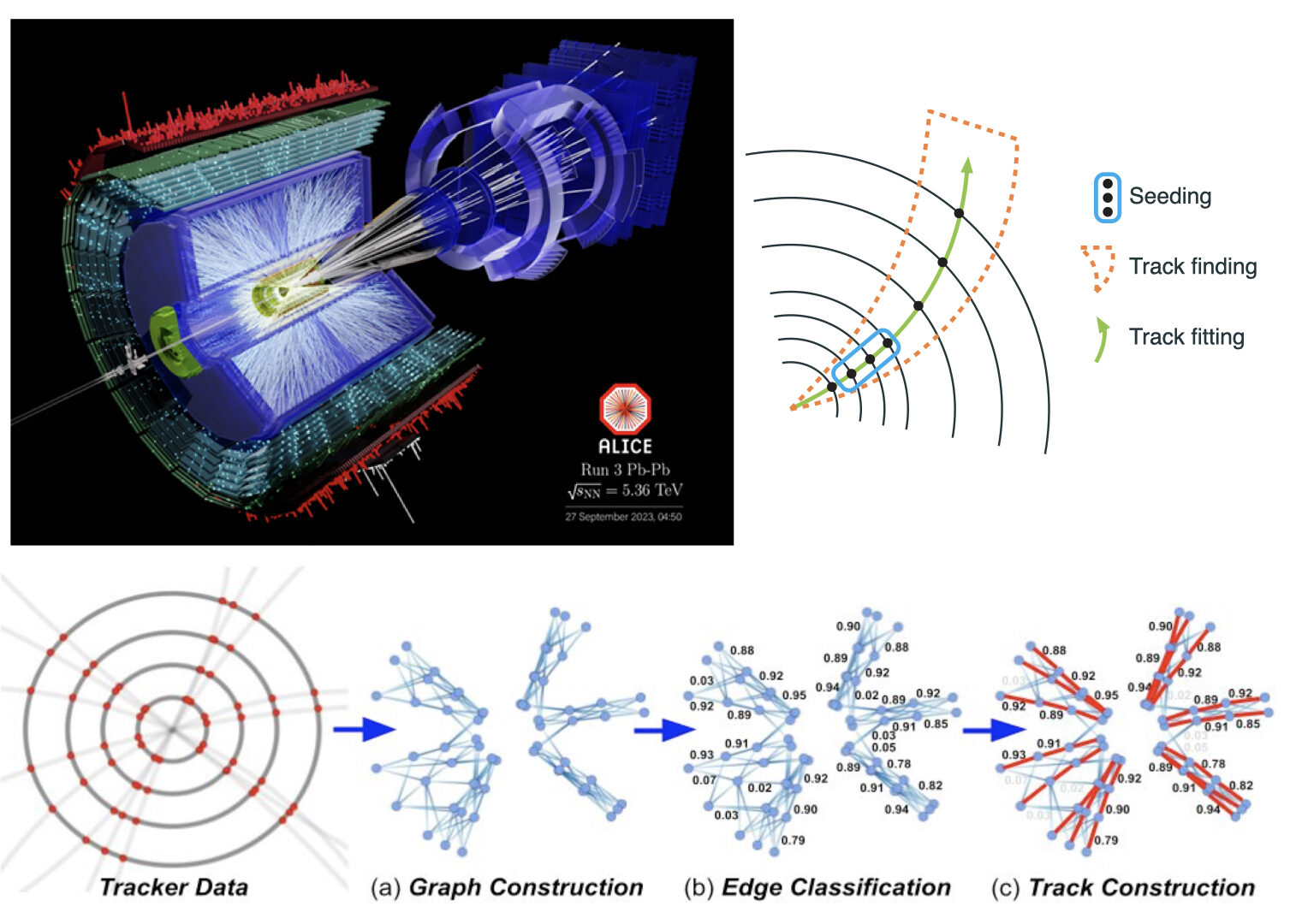
Particle tracking is one of the central tasks in modern high-energy physics experiments. When charged particles traverse a detector immersed in a magnetic field, they leave a series of signals, or hits, in the detector layers. The goal of tracking is to reconstruct the trajectories of these particles from the recorded hits, allowing physicists to determine their momentum, charge, and point of origin. Accurate tracking is essential for nearly all physics measurements, from precision studies of the Standard Model to searches for new particles and rare processes.
 As experiments at the Large Hadron Collider (LHC) move towards the High-Luminosity era, tracking faces unprecedented challenges. Future detectors will operate in environments with significantly higher particle multiplicities and collision rates, producing vast amounts of data that must be processed efficiently. Traditional tracking algorithms, while highly successful, are becoming increasingly computationally demanding as detector complexity and event occupancy continue to grow. Addressing these challenges requires the development of novel reconstruction techniques as well as more efficient use of modern computing architectures.
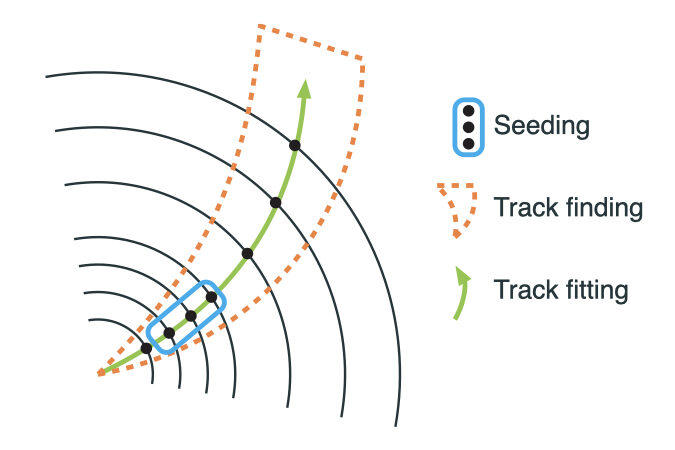
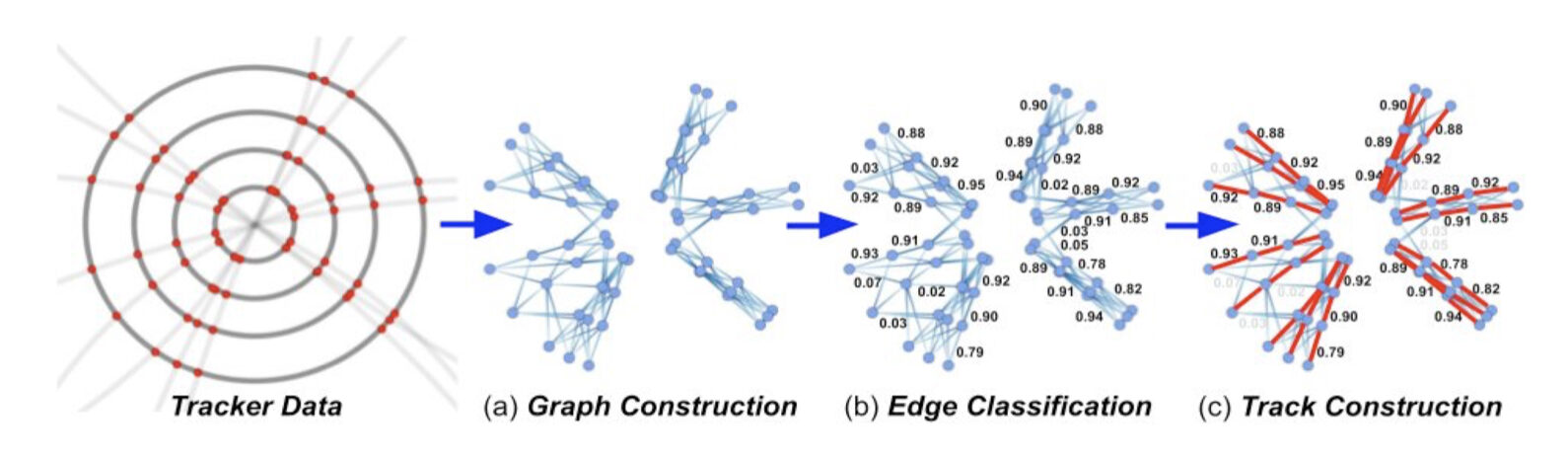 Our activities focus on advancing particle tracking through a combination of machine learning, high-performance computing (HPC), and detector software development. We investigate machine-learning approaches such as Graph Neural Networks (GNNs), Convolutional Neural Networks (CNNs), and other modern architectures to improve track finding, seeding, ambiguity resolution, and the reconstruction of challenging low-momentum particles. Particular emphasis is placed on developing algorithms that maintain excellent physics performance while reducing computational costs. These studies are carried out within widely used software frameworks such as ACTS (A Common Tracking Software) and are closely connected to future detector concepts, including ALICE 3 and the HL-LHC experiments.
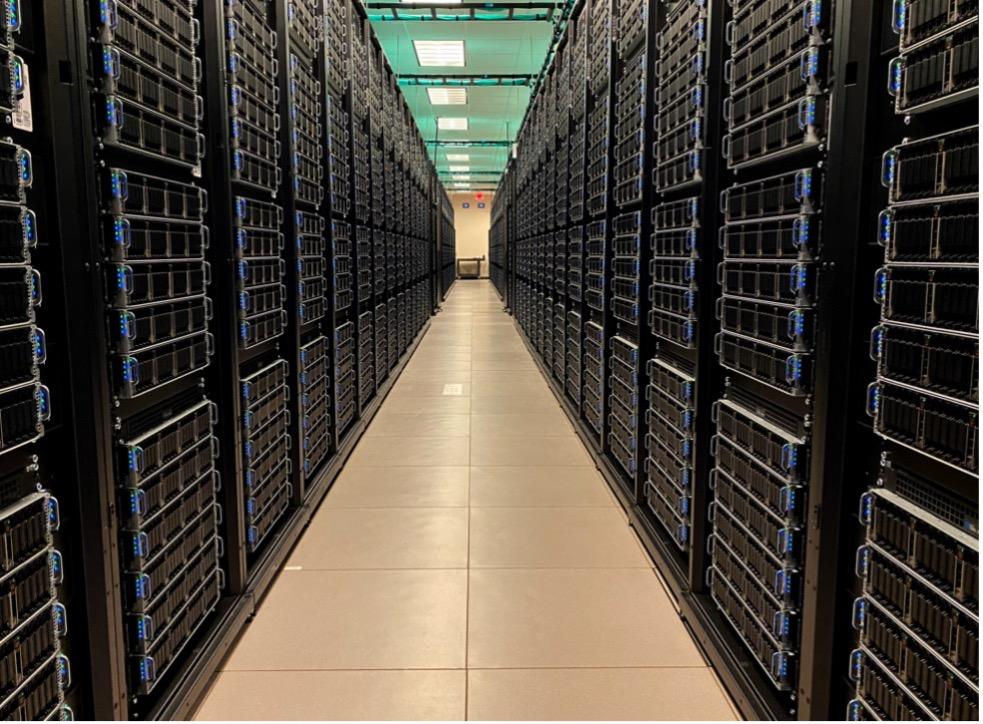 In parallel, we study how tracking algorithms can be optimized for modern heterogeneous computing platforms, including GPUs and large-scale HPC systems. This includes performance benchmarking, memory-layout optimization, data-movement studies, and the development of accelerator-friendly reconstruction workflows. Through collaborations with the Department of Advanced Computing Sciences (DACS) at Maastricht University and researchers at Nikhef, our group brings together expertise from particle physics, machine learning, and computer science. The overarching goal is to develop scalable tracking solutions capable of meeting the demanding requirements of next-generation particle physics experiments.
As experiments at the Large Hadron Collider (LHC) move towards the High-Luminosity era, tracking faces unprecedented challenges. Future detectors will operate in environments with significantly higher particle multiplicities and collision rates, producing vast amounts of data that must be processed efficiently. Traditional tracking algorithms, while highly successful, are becoming increasingly computationally demanding as detector complexity and event occupancy continue to grow. Addressing these challenges requires the development of novel reconstruction techniques as well as more efficient use of modern computing architectures.
Our activities focus on advancing particle tracking through a combination of machine learning, high-performance computing (HPC), and detector software development. We investigate machine-learning approaches such as Graph Neural Networks (GNNs), Convolutional Neural Networks (CNNs), and other modern architectures to improve track finding, seeding, ambiguity resolution, and the reconstruction of challenging low-momentum particles. Particular emphasis is placed on developing algorithms that maintain excellent physics performance while reducing computational costs. These studies are carried out within widely used software frameworks such as ACTS (A Common Tracking Software) and are closely connected to future detector concepts, including ALICE 3 and the HL-LHC experiments.
In parallel, we study how tracking algorithms can be optimized for modern heterogeneous computing platforms, including GPUs and large-scale HPC systems. This includes performance benchmarking, memory-layout optimization, data-movement studies, and the development of accelerator-friendly reconstruction workflows. Through collaborations with the Department of Advanced Computing Sciences (DACS) at Maastricht University and researchers at Nikhef, our group brings together expertise from particle physics, machine learning, and computer science. The overarching goal is to develop scalable tracking solutions capable of meeting the demanding requirements of next-generation particle physics experiments.